Advanced Rotomoulding Technology
Understanding the bi-axial rotational moulding process, raw material virginity, and multi-layer structural science that makes Penna water tanks virtually indestructible.
Why Bi-Axial Rotational Moulding?
Rotational Moulding (Rotomoulding) is a high-temperature, low-pressure polymer forming method. Inside our Guntur plant, hollow moulds filled with virgin micronized LLDPE polymer powder rotate simultaneously around two perpendicular axes while heated inside massive industrial ovens.
Because no external injection force or pressure is applied, the polymer melts smoothly and fuses naturally against the mould walls. This eliminates the molecular stress lines and thin weak spots that frequently plague blow-moulded or extruded tanks.
Anatomy of a 4-Layer Foam Insulated Tank
Each individual layer serves a dedicated protective function to maintain structural rigidity and keep stored drinking water fresh and clean.
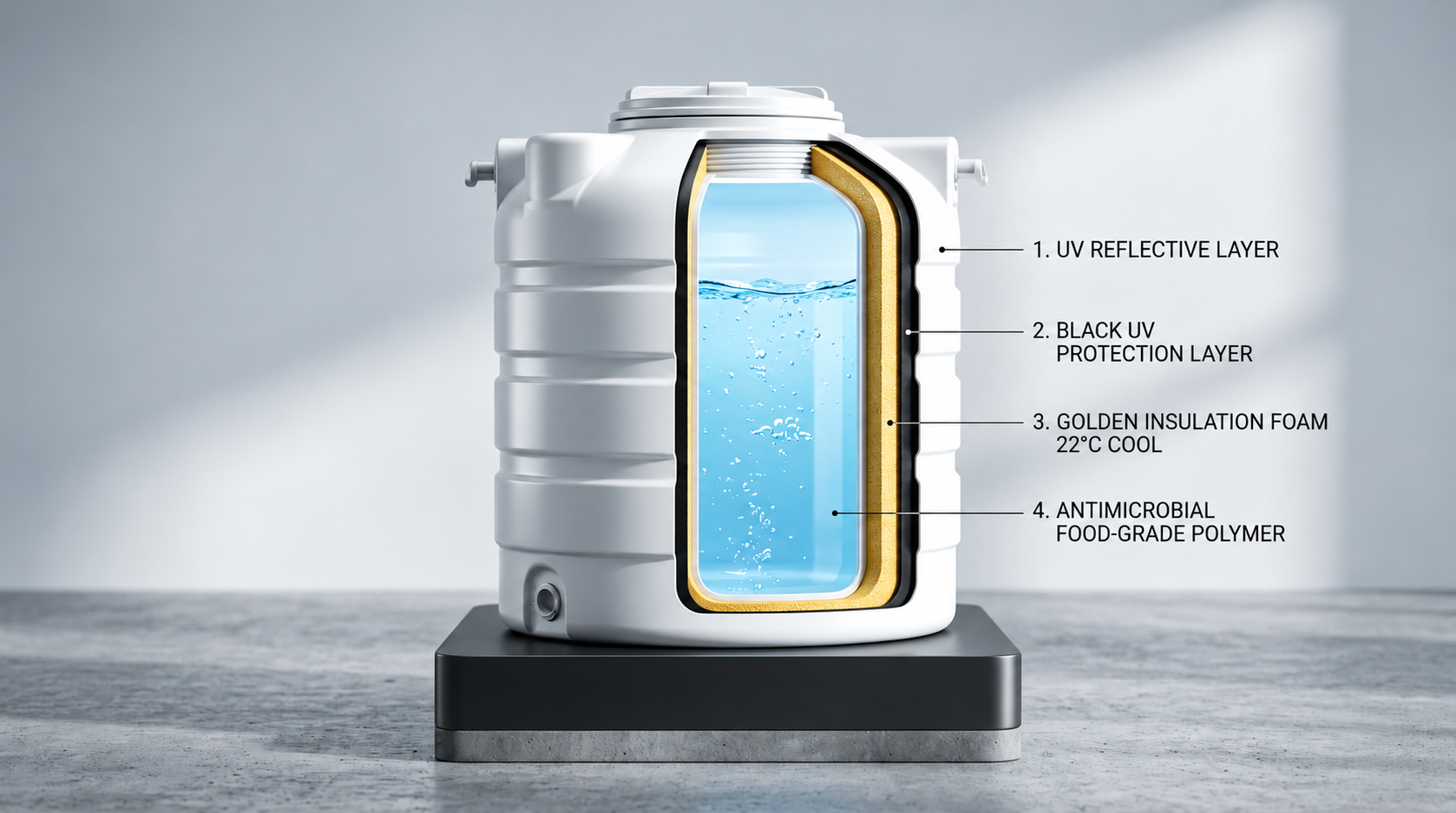
Outer UV Resistant Layer
Compounded with specialized color masterbatch containing high concentrations of hindered amine light stabilizers (HALS) to protect the tank structure against harsh ultraviolet radiation.
Polyurethane Foam Layer
High-density microcellular insulating foam core that acts as a thermal barrier, buffering the internal water temperature against hot summer sun and winter chilling.
Carbon Black Shield
A 100% opaque carbon black layer that completely prevents sunlight transmittance into the tank, making it impossible for algae, fungus, and microbes to photosynthesize.
Anti-Bacterial Inner Liner
Mirror-smooth FDA-compliant virgin polymer infused with anti-microbial additives that inhibit biofilm adhesion. Non-toxic, non-porous, and perfectly safe for human consumption.

Strict ISI Standards & Raw Material Purity
At Penna Polymer Products, quality is not an afterthought; it is engineered into every stage of the formulation:
- ✓ Virgin Rotomoulding Resins: Sourced strictly from leading petrochemical producers with verified melt flow index (MFI) and environmental stress crack resistance (ESCR).
- ✓ Drop Impact Testing: Tanks undergo drop testing from specified heights at freezing temperatures to verify high tensile impact toughness.
- ✓ Hydrostatic Pressure Testing: Filled to full capacity and sustained over prolonged periods to test tensile hoop stress compliance.